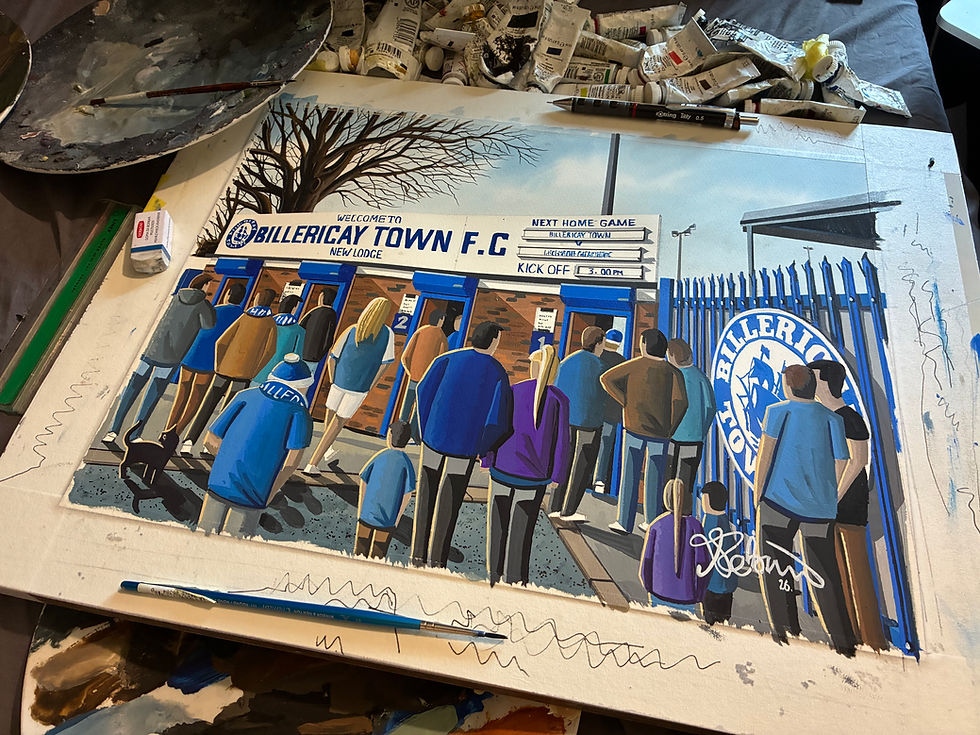
Capturing Maine Road Stadium: A Tribute to Manchester City FC's Legacy. Prints Coming Soon

Maine Road stadium holds a special place in the hearts of Manchester City supporters and football fans across England. Once known as the "Wembley of the North," this iconic ground was more than just a venue; it was a symbol of ambition, history, and community spirit. As I work on my latest painting of Maine Road, I reflect on the stadium’s rich past and the lasting legacy it left behind before the club moved on to new grounds. This post explores the story behind Maine Road, the significance it held, and how my artwork aims to celebrate its memory for supporters old and new.

The Origins of Maine Road and Its Ambitions
Maine Road was built on the site of a former brickworks in the Moss Side district of Manchester. The club’s vision was clear from the start: to create a stadium that could rival Wembley itself. This ambition earned Maine Road the nickname "Wembley of the North." When it opened in 1923, it was one of the largest stadiums in England, designed to hold tens of thousands of passionate football fans.
The stadium’s design reflected the era’s grand sporting architecture, with vast stands and a capacity that allowed Manchester City to host some of the biggest matches in English football. The location in Moss Side also connected the club deeply with the local community, making Maine Road a true home for supporters.
Record Attendance and Historic Moments
One of the most remarkable moments in Maine Road’s history came in 1934 during an FA Cup tie against Stoke City. The stadium drew an incredible crowd of 84,569 fans, setting a record for the highest attendance at an English club ground outside of the famous 1923 FA Cup Final at Wembley. This number speaks volumes about the passion and loyalty of Manchester City supporters during that era.
After the devastation of the Second World War, Maine Road played a crucial role beyond its own club. Manchester United, whose Old Trafford stadium was damaged during the Manchester Blitz, temporarily shared Maine Road while repairs were underway. This period highlighted the stadium’s importance to the city’s football culture as a whole.
The Final Years and Legacy
The last competitive match at Maine Road took place on May 11, 2003, against Southampton. After decades of hosting thrilling football, the stadium was closed and subsequently demolished in 2004. The site has since been redeveloped into a housing estate, but the club and community ensured that a piece of Maine Road’s history would remain. The original centre spot of the pitch was preserved as a communal green space, now known as Gibson Green, serving as a living reminder of the stadium’s past.
Bringing Manchester City, Maine Road Back to Life Through Art Prints
I first painted a scene of Maine Road in 2021, and it quickly became a popular print among supporters. The connection fans have with the stadium is strong, and many appreciate having a piece of that history to display in their homes or offices. This year, I decided it was time to revisit Maine Road with a fresh painting that captures the atmosphere and spirit of the ground.

The new artwork reflects the stadium’s grandeur and the emotions it inspired. I am pleased with how it has turned out, and I’m excited to offer it in a variety of formats. Later this autumn, fans will be able to purchase fine art prints, framed and unframed canvas prints, posters, and even mugs featuring the painting. These items make excellent gifts for any football supporter who cherishes the club’s history.
Why Retro Football Scenes Resonate with Supporters
Football fans often have a deep appreciation for retro scenes because they connect to memories, stories, and a sense of identity. Maine Road represents a time when football was raw, community-driven, and full of character. Displaying artwork of such iconic grounds allows supporters to celebrate their club’s heritage and keep those memories alive.
The painting and the Manchester City prints offers more than just decoration; it serves as a conversation starter and a tribute to the generations of fans who filled the stands. Whether in a living room or an office, it brings a piece of football history into everyday life.
What to Expect from the New Maine Road Collection
The upcoming Manchester City prints collection will include:
Fine art prints with high-quality paper and vivid colours
Framed and unframed canvas prints for a textured, gallery-style look
Posters in various sizes for flexible display options
Mugs featuring the painting, perfect for daily use or gifts
Each product is designed to meet the tastes of football fans who want authentic and meaningful memorabilia. The variety ensures there is something for everyone, whether you prefer classic wall art or practical items.
Preserving History Through Creative Expression
Art has the power to preserve history in ways that photos or written records cannot. By painting Maine Road, I aim to capture not just the physical structure but the emotions and stories tied to it. This creative process helps keep the legacy of Manchester City’s former home alive for future generations.
For supporters who never had the chance to visit Maine Road, the painting offers a glimpse into what made the stadium special. For those who remember it fondly, it provides a way to relive cherished moments.
Final Thoughts on Maine Road’s Enduring Impact
Maine Road was more than a stadium; it was a landmark of football culture and community pride. Its history is filled with unforgettable matches, record crowds, and moments of resilience. Through my latest painting, I hope to honour that legacy and give supporters a new way to celebrate their club’s roots.