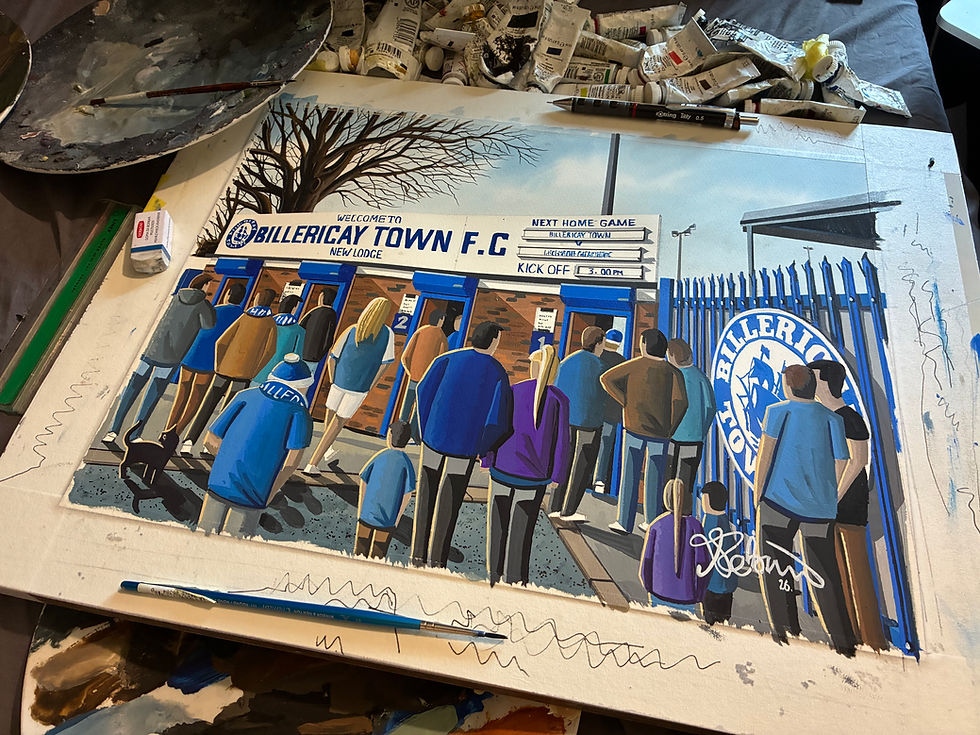
Capturing History in paint: My Journey Painting The Peveril of the Peak Pub

The Peveril of the Peak pub in Manchester is more than just a building. It holds stories, history, and a unique charm that few places can match. As I work on my latest painting of this iconic pub, I find myself drawn into its rich past and intricate details. This post shares my journey capturing the essence of The Peveril of the Peak on canvas, the challenges I face, and why this project means so much to me.

The Story Behind The Peveril of the Peak
Built around 1820, The Peveril of the Peak stands as a Grade II listed public house in the heart of Manchester city centre. Its striking green tiles, added in 1900, make it instantly recognisable. But the pub’s significance goes beyond its exterior. Inside, it boasts a rare, intact Victorian interior that has been carefully preserved over the years.
The pub’s name has an interesting origin. It either refers to a historic London-to-Manchester stagecoach or draws inspiration from Sir Walter Scott’s 1823 novel, Peveril of the Peak. This connection to history adds layers of meaning to the building, making it a perfect subject for a painting that aims to capture more than just its physical appearance.
Why I Chose This Subject
I have always been fascinated by places that tell stories through their architecture and atmosphere. The Peveril of the Peak is one of those rare venues where history feels alive. The polished wood, original etched glass, and bell pushes inside create a setting that transports visitors back in time.
Another reason this project is special to me is the legacy of Nancy Swanick, the legendary landlady who ran the pub for 55 years. From January 1971 until her passing in July 2026 at age 96, she was believed to be the oldest serving landlady in Manchester. Painting the pub feels like a tribute to her dedication and the community spirit she fostered.

The Painting Process and Challenges
Progress on this painting has been slower than I hoped. I’m juggling several projects at once, which makes it hard to focus fully. I dislike leaving work half finished because I lose enthusiasm when things drag on. Still, this project demands patience and attention to detail.
Capturing the pub’s unique green tiles was a challenge. Their glossy finish and the way they catch light required careful layering of paint to get the texture right. Inside, the Victorian interior’s intricate woodwork and etched glass needed precise brushwork to reflect their historic character.
Balancing the exterior and interior elements in one painting is tricky. I want to show the pub’s inviting facade while hinting at the warmth and history inside. This means choosing the right perspective and lighting to bring out both aspects.
What Makes The Peveril of the Peak Unique
The Campaign for Real Ale (CAMRA) recognizes The Peveril of the Peak’s interior as being of outstanding national historic importance. Features like polished wood paneling, bell pushes for service, and original etched glass are rare survivors from the Victorian era.
This pub is not just a place to drink; it’s a living museum. Many pubs have lost their original interiors to modernisation, but The Peveril of the Peak remains a window into the past. This makes it a valuable subject for anyone interested in heritage and culture.
Tips for Painting Historic Buildings
If you want to paint a historic building like The Peveril of the Peak, here are some tips I’ve found useful:
Research the history: Understanding the building’s background helps you capture its spirit, not just its appearance.
Choose your perspective carefully: Find an angle that shows the building’s character and tells a story.
Use layers: Build up textures gradually, especially for reflective surfaces like tiles or glass.
Be patient: Historic subjects often require more time to do justice to their complexity.
Looking Ahead
I’m excited to share the finished painting soon. This work is more than just an artistic project; it’s a way to honour a piece of Manchester’s heritage and the people who kept it alive. Once complete, I’ll create a new post to show the final piece and reflect on the experience.
For now, I’m grateful for the chance to slow down and focus on something meaningful amid a busy schedule. Painting The Peveril of the Peak reminds me why I love capturing history on canvas.
If you’re interested in historic pubs or local heritage, keep an eye out for my next update. I hope my painting will inspire others to appreciate the stories behind the places we often take for granted.