Capturing the Spirit of Holywell Church through Watercolour and Gouache

Updated: Mar 22
St John the Baptist Church in Holywell, Cambridgeshire, stands as a remarkable witness to centuries of history and faith. This ancient church, nestled in the village of Holywell-cum-Needingworth, offers more than just architectural beauty; it carries stories of early medieval origins, sacred springs, and local heritage. Through the delicate mediums of watercolour and gouache, artist Andrew Robinson brings this historic site to life, blending artistic skill with deep respect for the church’s significance. This post explores the story behind the painting In Holywell We Dwell, the history of the church, and how these elements come together in a unique piece of rural art.

The History Behind St John the Baptist Church in Holywell-cum-Needingworth
The church’s roots reach back over a thousand years. Records show a church existed on this site as early as 969, and the Domesday Survey of 1080 confirms the presence of a priest and church land held by the Abbot of Ramsey. This long history is reflected in the church’s architecture and its connection to the village’s name, which comes from the holy spring located within the churchyard.
The Holy Well and Its Significance
The holy spring predates Christianity and was a place of pilgrimage for centuries. In 1846, Reverend S. Beckwith covered the spring with a protective structure, preserving its sacred status. This well remains a key feature of the churchyard and a symbol of the village’s spiritual heritage.
Architectural Highlights
The church building itself is a blend of periods and styles:
The chancel dates from the 13th century, representing the earliest surviving part of the current structure.
The north arcade was built in the mid-15th century.
The south arcade and aisle date to around 1300.
The west tower, constructed in 1547, uses stone from the dissolved Ramsey Abbey, linking the church to wider historical events.
The church underwent significant restorations in 1862 and 1915, which shaped its current appearance while preserving its historic character.
The Artistic Process Behind In Holywell We Dwell
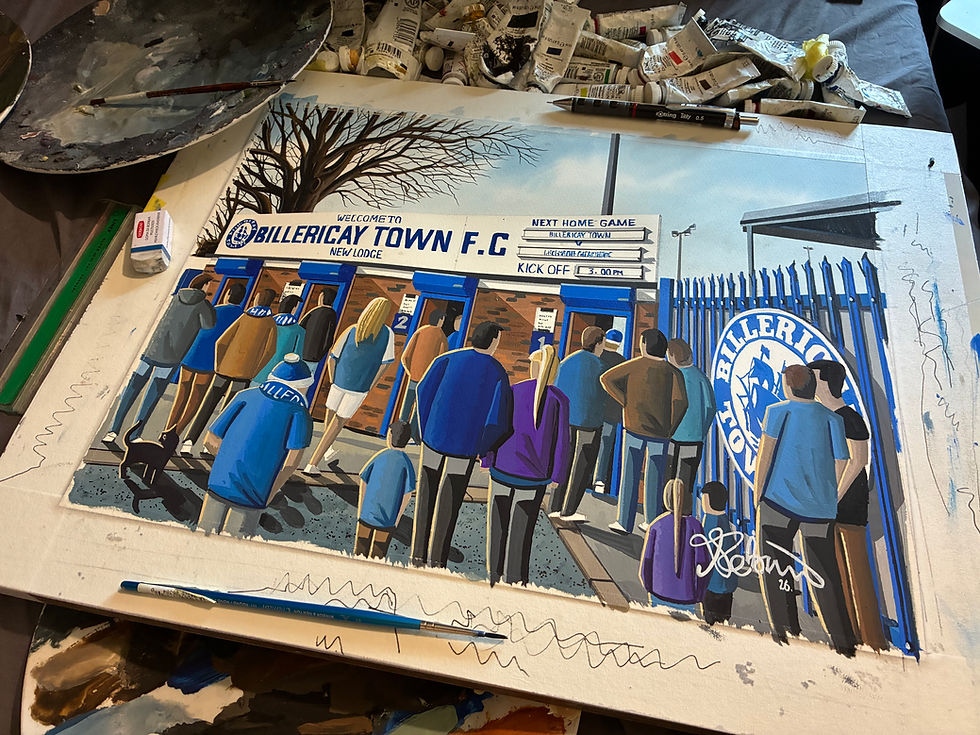
Andrew Robinson, a Cambridgeshire artist known for his rural art and landscape art, chose to capture this church using a combination of Winsor & Newton Professional Watercolour and Designers Gouache. This choice of materials allows for rich textures and vibrant yet subtle colour layers that bring out the church’s stonework and surrounding environment.
Materials and Techniques
Paper: The painting is created on St Cuthberts Mill, Saunders Waterford Hot Press watercolour paper. This paper’s smooth surface enhances the fine detail and layering possible with watercolour and gouache.
Watercolour: Provides transparency and fluidity, perfect for capturing the light and atmosphere around the church.
Gouache: Adds opacity and depth, used to highlight architectural details and the texture of the stone.
The original painting measures 16" x 12", a size that allows for detailed work while maintaining a strong composition.
Bringing Holywell-cum-Needingworth to Life through Art
Andrew Robinson’s work goes beyond simple representation. His painting invites viewers to experience the quiet dignity of the church and its place within the rural landscape of Cambridgeshire. The combination of watercolour painting and gouache painting techniques reflects the layered history of the site.
Why This Painting Matters
It preserves the historic character of the church, showing details like the 16th-century tower and the covered holy well.
It connects viewers to the spiritual and cultural heritage of Holywell-cum-Needingworth.
It showcases the skill of a Cambridgeshire artist who understands the local landscape and architecture deeply.
This painting is a valuable addition to the collection of holywell art and needingworth art, celebrating the unique identity of the area.
The Role of Rural Art in Preserving Local Heritage
Rural art like Andrew Robinson’s work plays an important role in documenting and celebrating places that might otherwise be overlooked. Churches such as St John the Baptist are not only places of worship but also landmarks that tell stories about the communities around them.
How Landscape Art Connects People
It highlights the natural and built environment in ways that photography sometimes cannot.
It encourages viewers to slow down and appreciate the details of historic sites.
It supports local artists like Andrew Robinson artist, who bring attention to Cambridgeshire’s rich cultural landscape.
How to Appreciate and Collect Cambridgeshire Art
For those interested in collecting or learning more about rural art and historic sites, Andrew Robinson’s painting offers a perfect example. His work is available through various local galleries and online platforms under the name andrewrobinsonart.
Tips for Collectors
Look for original works on quality paper like Saunders Waterford.
Consider the story behind the artwork—places like Holywell-cum-Needingworth have deep histories that add meaning.
Support local artists who focus on regional subjects, helping to keep the cultural heritage alive.
The painting In Holywell We Dwell captures more than just the image of St John the Baptist Church. It reflects the spirit of Holywell-cum-Needingworth, its history, and its place in the Cambridgeshire landscape. Through the skilled use of watercolour and gouache, Andrew Robinson artist invites us to see this rural church with fresh eyes and renewed appreciation.
If you want to explore more about rural art or discover other works by Andrew Robinson, keep an eye on local exhibitions and online galleries featuring Cambridgeshire art. This painting is a reminder that every historic site holds stories waiting to be told through the brushstrokes of a dedicated artist.